Free Printable Flute Staff Paper: Notation Guide & Exercises
Are you a flutist or a music student constantly searching for free, high-quality staff paper tailored for your instrument? Struggling to find blank sheet music for flute practice? Scales, etudes, or melodies—it's frustrating and pricey. Commercial books run out fast. Generic templates rarely fit your needs.
This guide is here to solve that problem. We will show you exactly how to generate and download unlimited, fully customized flute staff paper for free. More than that, we'll explore essential notation basics and provide practical exercises to help you fill those pages and enhance your practice sessions. It’s time to stop searching and start creating with the perfect custom staff paper for your musical journey.
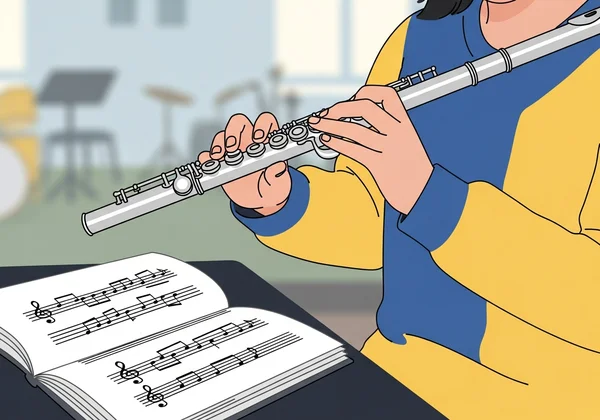
Get Your Free Printable Flute Sheet Music Now
The most important tool for any musician is one that is reliable, accessible, and fits their needs. For handwritten music, that tool is high-quality staff paper. At our site, we provide an intuitive platform that puts you in complete control, allowing you to create the perfect blank flute manuscript paper in seconds.
Customizing Your Flute Staff Paper PDF
Forget generic, one-size-fits-all templates. Your practice requires paper that works for you. Whether you need lots of space for detailed notes or more staves per page for longer compositions, customization is key.
Here’s how simple it is to create your ideal flute staff paper:
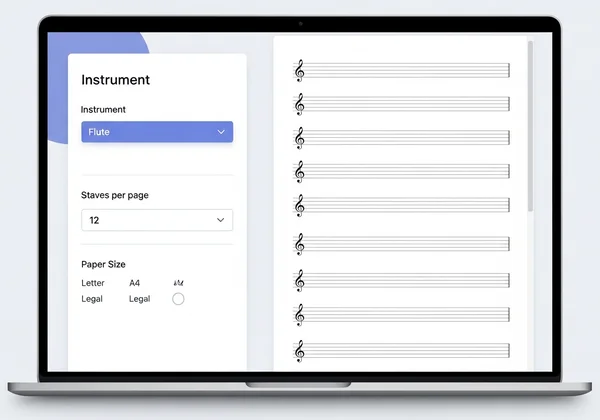
- Visit the Website: Head over to the free online tool.
- Select Your Instrument: Choose the standard staff paper template, which is perfect for flute. The tool automatically sets the treble clef, the standard for flute music.
- Choose Your Layout: Decide how many staves (the set of five horizontal lines) you want per page. Options like 10 or 12 staves are popular for general practice and exercises.
- Set Page Parameters: Select your preferred paper size (A4 or Letter) and enter the number of pages you need. You can print one page for a quick exercise or a whole booklet for the month.
- Preview and Download: A real-time preview on the right side of the screen shows you exactly what your document will look like. Once it’s perfect, just click "Export as PDF."
In under a minute, you can generate your PDF and have a professional-grade document ready for your music stand.
Instant Download: Your Flute Manuscript Paper Ready to Print
There's no need to sign up, enter an email address, or deal with any hidden costs. The process is lightning-fast. Click export, and your PDF downloads straight to your device.
The file is a high-resolution document, ensuring that the lines are crisp and clear when printed. This professional quality makes your handwritten music easy to read, whether you're using it for personal practice, sharing it with your music teacher, or collaborating with other musicians. Your blank flute manuscript paper is always just a few clicks away.
Mastering Flute Notation: Essential Clefs & Symbols
Having the right paper is the first step. The next is filling it with music. Understanding the basic language of music notation is essential for any flutist. Your printable staff paper is the canvas where you’ll practice this language.
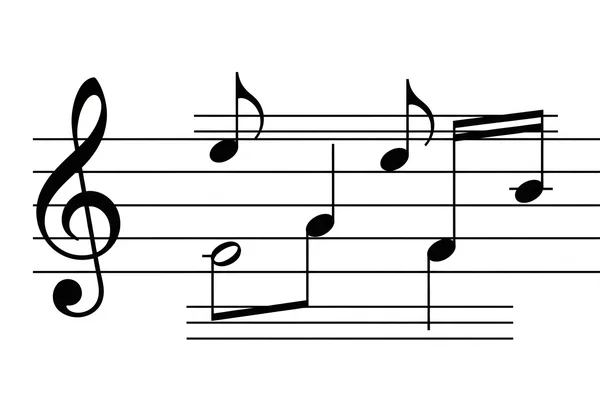
The Treble Clef for Flute: Understanding Your Range
The flute is a high-pitched instrument, which is why its music is written in the treble clef. The treble clef, also known as the G-clef, is the large, ornate symbol you see at the beginning of each staff. Its elegant curl wraps around the second line from the bottom, indicating that this line represents the note G above middle C.
All other notes on the staff are read in relation to this G. The flute's range starts at middle C—on a ledger line below the staff. It extends up over three octaves. The treble clef handles this range cleanly. This avoids extra ledger lines, making the music easy to read.
When you download your staff paper from our site, the treble clef is already in place, so you can start writing immediately.
Common Flute Markings: Articulation, Dynamics, and More
Music is more than just notes. It’s about how those notes are played. Your flute notation paper will become home to various symbols that give the music life and expression. Here are a few essential markings to know:
-
Articulation Marks: These symbols tell you how to attack and shape a note.
- Staccato: A dot placed above or below a notehead, indicating it should be played short and detached.
- Legato/Slur: A curved line over or under a group of notes, meaning they should be played smoothly and connected without re-articulating with the tongue.
- Accent: A small ">" symbol above or below a notehead, telling you to play that note with more emphasis.
-
Dynamic Markings: These tell you how loudly or softly to play. They are usually written below the staff.
- p (piano): Play softly.
- f (forte): Play loudly.
- Crescendo (<): Gradually get louder.
- Decrescendo (>): Gradually get softer.
Learning to read and write these symbols on your practice sheets will transform your playing from simply accurate to truly expressive.
Using Your Flute Practice Sheets: Exercises & Transcription
Now it's time to put your free flute staff paper to work. A blank page is an invitation to improve your skills, organize your thoughts, and unlock your creativity. Here are two practical ways to use your newly printed sheets.

Daily Scales & Arpeggios on Custom Staff Paper
Scales and arpeggios are the building blocks of technique. Writing them out by hand builds several skills. It reinforces your knowledge of key signatures. It helps you memorize patterns. And it creates a clear, personalized practice plan.
Here’s a simple exercise to try:
- Download your practice sheets with 12 staves per page to give yourself plenty of room.
- On the first staff, write out the C major scale, one octave, using whole notes. Name each note below the notehead (C, D, E, F, G, A, B, C).
- On the next staff, write out the C major arpeggio (C, E, G, C) in the same way.
- Repeat this process for other familiar keys, such as G major (one sharp) and F major (one flat).
- As you get more comfortable, write them using different rhythms, such as quarter notes or eighth notes, and add slurs over different note groupings to practice your articulation.
This routine turns your blank paper into a powerful tool for building muscle memory and theoretical knowledge.
Transcribing Melodies: From Ear to Your Flute Notation Paper
Transcription—the act of listening to a piece of music and writing it down—is one of the best ear-training exercises a musician can do. It connects your ears, your brain, and your instrument in a profound way.
Get started with this fun activity:
- Choose a very simple, well-known melody. "Twinkle, Twinkle, Little Star" or "Mary Had a Little Lamb" are perfect starting points.
- Listen to the first phrase of the song a few times. Try to sing it back.
- Figure out the notes on your flute. Don't worry about the rhythm at first; just find the pitches.
- Once you have the notes, write them down on your flute notation paper.
- Now, listen again for the rhythm. Are the notes long or short? Try to notate the rhythm using quarter notes, half notes, and whole notes.
Don’t worry about getting it perfect on the first try. The process itself is what builds your musical skills. Your custom staff paper gives you endless space to try, erase, and try again.
Empower Your Flute Journey with Custom Staff Paper
From mastering fundamental scales to jotting down a beautiful melody you just composed, blank staff paper is an essential part of a musician's toolkit. Having free, unlimited access to high-quality, printable sheets empowers you to practice, create, and learn without limits.
Our free, customizable tool removes the barriers between you and your musical goals. You can craft the exact practice materials you need for any project, anytime.
Are you ready to elevate your practice sessions? Visit StaffPaper.org today to design and download the perfect flute staff paper for your needs.
Frequently Asked Questions About Flute Staff Paper
Where can I get free printable flute staff paper?
You can get unlimited free printable flute staff paper using our online tool. It allows you to customize the number of staves, paper size, and number of pages, and then instantly download a high-quality PDF at no cost. It's the ideal resource for students, teachers, and composers looking to get free staff paper on demand.
How many lines are on standard flute staff paper?
Standard flute staff paper uses a musical staff, which consists of five horizontal lines and four spaces. Each line and space represents a different musical pitch, which is determined by the treble clef placed at the beginning of the staff.
What is flute staff paper also called?
Flute staff paper is also commonly known as manuscript paper, blank sheet music, or staff notation paper. These terms all refer to paper printed with blank staves used for handwriting music.
Can I customize the number of lines or add a clef to my flute paper?
Absolutely! While the standard staff always has five lines, with our generator, you can fully customize the number of staves that appear on a single page. You can choose a layout with fewer staves for more space or more staves to fit longer pieces. The treble clef is automatically included for standard templates, ensuring your paper is ready for flute notation right away.