Master Music: Staff Paper for Ear Training & Sight Reading
Every musician has felt it: that frustrating gap between the music you hear in your head and what you can play or write down. Or perhaps you’ve stared at a new piece of music, and the notes looked more like a foreign language than a beautiful melody. How do you bridge the gap between hearing, seeing, and playing music?
The answer might be simpler and more accessible than you think. It’s not about expensive software or complicated apps. It’s about mastering the fundamentals with one of the most timeless tools available: a simple sheet of staff paper. With the right exercises, printable manuscript paper becomes a powerful gym for your musical mind, sharpening both your ear and your eyes. This guide will show you exactly how to use it.
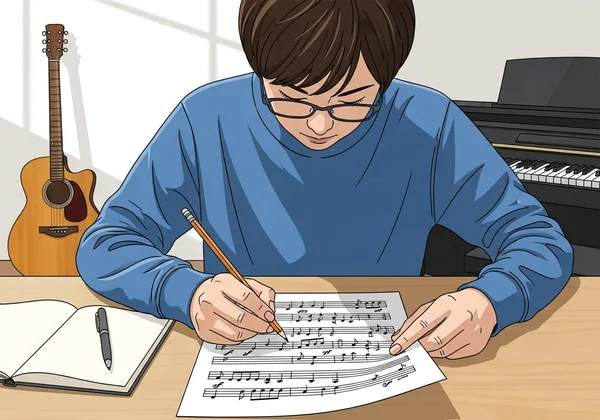
We'll explore practical, effective exercises for ear training and sight reading that you can start today. All you need is a pencil and a willingness to practice. To get started, you can download completely free, customizable manuscript paper tailored to any instrument or exercise.
Unlocking Your Musical Ear: Staff Paper Ear Training Exercises
Ear training connects the sounds you hear with musical notation. This skill allows songwriters to capture melodies and violinists to play in tune with orchestras. Using staff paper makes this process tangible. Instead of just guessing, you are actively translating sound into a written language.
Hearing Intervals & Chords: Writing What You Hear
One of the best ways to start training your ear is by identifying the building blocks of harmony: intervals and chords. This exercise builds a strong foundation for understanding how notes relate to each other.
Here’s how to do it:
- Find a partner or use a keyboard app. Have them play a simple interval, like a Major 3rd, or a basic chord, like a C Major triad.
- Listen carefully. First, try to identify the sound. Does it sound happy (major) or sad (minor)? Does it feel open and spacious or close and dissonant?
- Write it down. On your staff paper, write the notes you think you heard. If you heard a C and an E, notate them.
- Check your work. Compare your notation to what was actually played.
This direct feedback loop—listen, write, check—is incredibly effective. It physically connects the sound in your ear to the notes on the page. This process solidifies your understanding.
Melodic Dictation: Transcribing Tunes onto Blank Staff
Melodic dictation is the art of writing down a melody after hearing it. This is a crucial skill for composers, arrangers, and anyone who wants to learn songs by ear. Blank staff paper is your canvas for this exercise.
Follow these steps:
- Start simple. Find a very simple, short melody. A children's song like "Twinkle, Twinkle, Little Star" is a perfect starting point.
- Listen for the big picture. Play the melody once without writing anything. Just listen to the contour. Does it go up or down?
- Notate the rhythm. Listen again, and this time, tap your pencil to the beat. Try to write down just the rhythms of the notes (quarter notes, half notes, etc.) on a single line.
- Add the pitches. On your final listen, fill in the pitches for the rhythms you wrote.
Don’t worry about getting it perfect at first. The goal is progress, not perfection. A simple sheet of blank music staff is all you need to begin strengthening this vital musical muscle.
Rhythmic Dictation: Capturing Beats with Staff Paper
Rhythm is the heartbeat of music. If you can’t understand or notate rhythm, melodies and harmonies will fall apart. Rhythmic dictation isolates this element so you can focus on it completely.
This is a fun and easy exercise:
- Have a friend clap a simple rhythm. It should only be one or two measures long.
- You write it down. Using a single line on your staff paper (or a percussion staff), notate the rhythm you heard.
- Clap it back. To check your accuracy, clap your written rhythm. Does it match what you heard?
This trains your brain to instantly recognize the duration of notes and rests. It’s an essential skill for playing in time with other musicians and accurately reading sheet music.
Sharpen Your Vision: Sight Reading Practice with Blank Sheet Music
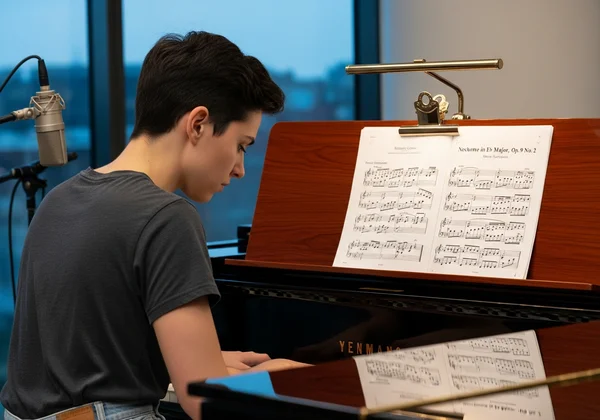
Sight reading is the ability to read and perform a piece of music you’ve never seen before. For session musicians, orchestral players, and accompanists, it’s a non-negotiable skill. For everyone else, it’s the key to unlocking a world of new music quickly and confidently. Using blank sheet music to create your own drills puts you in control of your progress.
Note Recognition Drills: Speeding Up Your Music Reading
The biggest barrier to fast sight reading is slow note recognition. The goal is instant, automatic note recognition. If you have to stop and think, 'Every Good Boy Does Fine,' for every note, you'll never achieve fluency.
Try this simple drill:
- Prepare your sheet. Print a standard sheet of staff paper.
- Fill it with notes. Randomly write whole notes all over the staff, both on the lines and in the spaces. Don't worry about creating a melody.
- Set a timer. Give yourself 60 seconds and name as many notes as you can, pointing to each one with your pencil as you go.
- Track your score. Write down how many you identified correctly. Try to beat your score every day.
This exercise is like flashcards for music, building the rapid-fire recall you need for fluid sight reading.
Rhythmic Reading Challenges: Mastering Complex Patterns
Just as you isolated rhythm for ear training, you can do the same for sight reading. Many musicians get tripped up by complex rhythms, not the pitches themselves.
Create your own challenges:
- Write out tricky rhythms. Use your staff paper to write lines of challenging rhythmic patterns. Include dotted notes, sixteenth notes, ties, and syncopation.
- Tap it out. Set a metronome to a slow, steady tempo. Tap the rhythm on your desk with your hand or a pencil while reading the notation.
- Increase the speed. Once you can tap the rhythm perfectly, gradually increase the metronome speed.
This builds a strong rhythmic vocabulary, so when you see these patterns in real music, you won’t hesitate.
Reading Melodies & Harmonies: From Staff to Performance
Ultimately, sight reading combines pitch and rhythm. Once you're comfortable with the individual drills, it's time to put them together. The best part is, you don’t need a book of exercises—you can create your own.
Here’s a final exercise to integrate your skills:
- Write a simple melody. On your staff paper, compose a short, 4-measure melody. Use simple rhythms and notes that are easy for you to play on your instrument.
- Put it away. Hide the paper for a day so you forget exactly what you wrote.
- Sight-read it. The next day, take it out and try to play it on your instrument as if you’re seeing it for the first time.
This powerful exercise makes you both the composer and the performer, giving you a deep understanding of how notation translates directly into sound. For this, using a custom staff paper for your specific instrument, like a grand staff for piano or a TAB staff for guitar, makes the practice even more effective.
Integrate & Practice: Printable Exercises for Music Students
Knowledge is only useful when you apply it. The exercises above are powerful, but they only work if you build them into a consistent practice schedule. Turning these drills into a daily habit is the fastest way to see real, lasting improvement in your musicianship.
Designing Your Daily Practice Routine: Structure for Success
Consistency beats intensity every time. A focused 15 minutes of practice every day is far more effective than a three-hour cram session once a month. A structured routine ensures you cover all your bases and build skills systematically.
Here is a sample 15-minute daily workout:
- Minutes 1-5: Ear Training. Do one dictation exercise. Monday could be intervals, Tuesday melodic, Wednesday rhythmic, and so on.
- Minutes 6-10: Sight Reading Drills. Spend five minutes on a note recognition or rhythm-tapping exercise.
- Minutes 11-15: Integrated Practice. Sight-read one short, new melody.
This simple routine is manageable, effective, and easy to stick with.
Tailoring Staff Paper Templates to Your Level
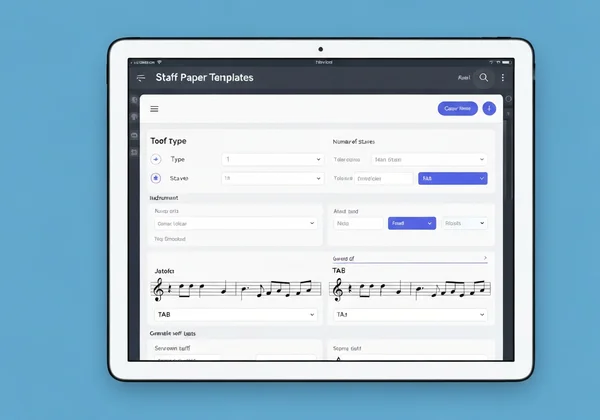
One of the biggest advantages of a digital tool is customization. Your practice materials should match your specific needs, instrument, and skill level. A beginner pianist needs a different layout than an advanced choral arranger.
This is where an online tool shines. Instead of being stuck with a generic notebook, you can create the perfect practice sheet every time. For instance:
- For pianists: Generate a Grand Staff with 8 or 10 staves per page.
- For guitarists: Create a template with both standard notation and a TAB staff below it.
- For vocal students: A simple treble or bass clef staff with 12 staves is perfect.
- For composers: You might want manuscript paper with no clefs at all to sketch out ideas.
Having the right tool removes friction and makes practicing easier. You can create custom templates for any of these needs in just a few seconds.
Tracking Progress & Staying Motivated
It can be hard to stay motivated when you don't see immediate results. That’s why tracking your progress is so important. When you can look back and see how far you’ve come, it provides a powerful boost to keep going.
For progress tracking, keep a binder of all your completed exercise sheets. Date each one. After a month, compare your first melodic dictation attempt with your most recent one. The improvement will likely be obvious, proving that your hard work is paying off. This physical record of your journey is one of the best motivators there is.
Frequently Asked Questions About Ear Training & Sight Reading with Staff Paper
How can staff paper significantly improve my ear training?
Ever tried to remember that melody humming in your head later in the day? That's where staff paper becomes your musical memory. By writing down what you hear, you're not just capturing notes—you're building a direct bridge between your musical imagination and tangible results.
What kind of staff paper is most effective for daily sight reading practice?
The most effective staff paper is one that matches your instrument and the specific exercise. For general note recognition drills, a standard 12-stave sheet with a treble or bass clef works great. For pianists, a grand staff is essential. For guitarists, including a TAB staff is very helpful. The key is to use a clean, legible format that doesn't distract you.
Where can I find free printable exercises for music students to use with staff paper?
While many music theory websites and books contain exercises, the first and most important resource is the paper itself. You can create your own endless supply of exercises just by using your instrument and a pencil. For the material, a great place to start is StaffPaper.org, where you can design your own custom sheets for free. Then, you can copy simple melodies from public domain folk songs or theory books to use for your practice.
How often should I practice ear training and sight reading for optimal results?
Consistency is far more important than duration. Practicing for 10 to 15 minutes every single day will yield much better results than practicing for two hours once a week. This daily repetition builds strong neural pathways and turns these skills into second nature.
Can StaffPaper.org help me create custom templates for my specific musical exercises?
Absolutely. This is one of its greatest strengths. You have complete control over the template, including the instrument type (piano, guitar, choir), the clef (treble, bass, alto, tenor, or none), the number of staves per page, and the paper size. This allows you to create the perfect, targeted worksheet for any ear training or sight reading exercise you can imagine.
Your Pathway to Musical Fluency: Start Practicing Today!
Musical fluency isn't achieved overnight, but through focused practice that builds upon itself. Each exercise you complete, each melody you transcribe, strengthens the neural pathways that connect your ear, mind, and fingers. Ear training and sight reading are not mysterious talents you are born with; they are skills that can be developed through consistent, intelligent practice.

The humble sheet of staff paper is your most loyal partner on this journey. It’s a blank slate for your progress, a mirror reflecting your growing abilities, and a tool for turning abstract concepts into concrete skills. By removing the cost and hassle of finding the right materials, StaffPaper.org empowers you to focus on what truly matters: the practice itself.
Stop wishing you were a better reader or had a better ear. Start training today. Your journey to musical fluency starts with a single sheet. Get your free staff paper now and unlock your full potential.