Custom Staff Paper for Music Exams
As a music educator, few experiences are as fulfilling as guiding students through their exam preparation journey. It’s a process of seeing skills develop, confidence grow, and a love for music solidify. However, it also comes with a hidden challenge that every teacher knows well: standardized testing.
How can you best prepare your students for the specific formats and pressures of music theory and performance exams?
The answer often lies in the tools we use. While standard manuscript paper is useful, it rarely matches the exact layouts students will face in their tests. This article will show you how to leverage custom staff paper to give your students a significant advantage. We'll explore the requirements of major exams, demonstrate how to design targeted practice sheets, and provide a clear plan for implementation.
With the right resources, you can transform exam preparation from a source of stress into an opportunity for focused, effective learning. The first step is getting the right paper, and you can create your own for free with our customizable tool.
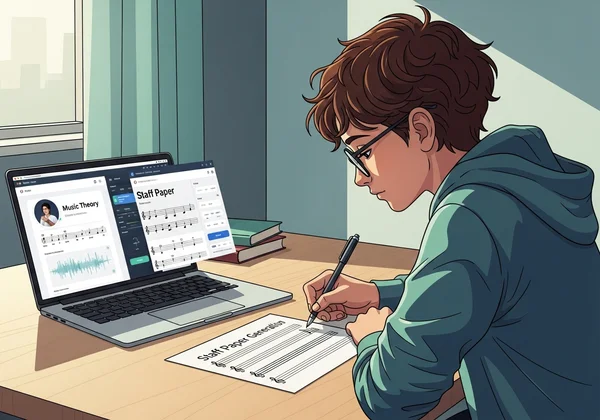
Understanding Standardized Music Test Requirements
Before you can create effective practice materials, you need a deep understanding of what the exams demand. Music examination boards like ABRSM (Associated Board of the Royal Schools of Music) and RCM (The Royal Conservatory of Music) have specific standards for their theory and practical tests. Knowing these details is crucial for preparing your students.
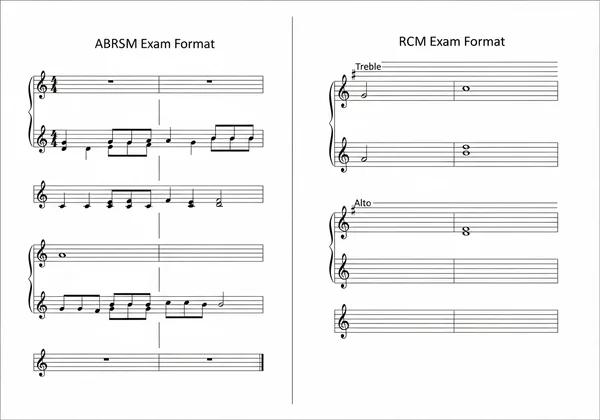
ABRSM Exam Format Requirements
While both ABRSM and RCM are highly respected, their exams have subtle but important differences. For example, ABRSM theory exams often include specific types of melody writing or harmony questions that require a certain number of staves arranged in a particular way. A student accustomed to one format might feel disoriented when faced with another.
RCM Exam Format Requirements
RCM exams, on the other hand, might have different layouts for their harmony and counterpoint exercises. As a teacher, your goal is to eliminate this variable. By creating practice sheets that mirror the layout of the specific exam your student is taking, you help them build familiarity and confidence, allowing them to focus entirely on the music.
Common Theory Test Layouts
Beyond the differences between boards, there are common formats you need to prepare students for. Theory exams almost always involve sections for writing scales, intervals, chords, and transposing melodies. Each of these tasks is easier to practice on paper designed for it. For instance, a sheet with widely spaced staves is perfect for younger students still developing their note-writing skills.
Sight-reading tests present another challenge. Students must quickly process and perform a piece they've never seen before. You can simulate this by creating custom sight-reading exercises on clean, uncluttered staff paper. Using a template with only a few staves per page can help students focus on short passages, just as they would in an exam. Creating these specific formats is simple when you have a tool that lets you design your own manuscript paper.
Designing Custom Staff Paper Templates for Exam Preparation
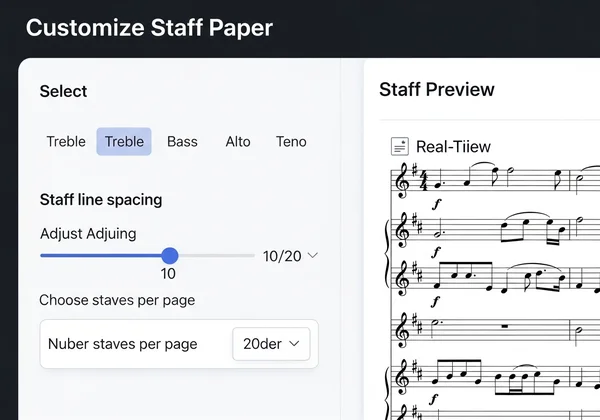
Once you understand the exam requirements, you can start designing targeted practice materials. This is where a flexible tool becomes essential. The ability to customize clefs, staff spacing, and entire layouts empowers you to create the perfect worksheet for any lesson. This process turns generic practice into a strategic and personalized training plan.
Clef Selection Strategies for Different Test Levels
The clef is the foundation of musical notation, and students must master them at different stages. For beginners, you might start with templates that only feature the treble or bass clef. As they advance to intermediate levels, you can introduce materials with both, preparing them for piano grand staff notation. For advanced students or those learning instruments like the viola or cello, creating worksheets with alto and tenor clefs is critical. Exam questions often test a student's ability to read and write in these less common clefs. By using custom templates, you can generate endless exercises focused solely on C-clef proficiency, ensuring your students are prepared for any question the exam throws at them.
Staff Line Spacing by Age Group
Clear musical handwriting, or "notation," is a skill that is often overlooked. Examiners need to be able to read what a student has written. Messy or cramped notation can lead to lost marks, even if the musical answer is correct. This is especially true for younger students whose fine motor skills are still developing. You can directly address this by optimizing staff line spacing. For young beginners, use templates with very wide spacing (e.g., 6 or 8 staves per page). This gives them ample room to draw large, clear noteheads, stems, and clefs. As their handwriting improves, you can gradually transition them to standard spacing (10 or 12 staves per page) to simulate the real exam paper. This progressive approach builds both their confidence and their technical skill.
Specialized Templates for Advanced Theory Questions
Harmony, counterpoint, and composition questions require more complex layouts. A standard 12-stave sheet is often not suitable for four-part choral writing or developing a melodic idea. This is where specialized templates make a world of difference. For harmony exercises, you can design a template using the grand staff, perfect for keyboard-style writing. For choral arrangement practice, a four-stave system (Soprano, Alto, Tenor, Bass) is ideal. By providing your students with professional-looking paper that matches the task, you encourage organized thinking and neat work. It also prepares them for the specific layouts they will encounter in higher-grade theory exams. You can create these specialized templates in just a few clicks.
Classroom Implementation and Student Success Stories
Creating custom materials is only half the battle; integrating them effectively into your teaching is key to unlocking student success. With a strategic approach, these custom templates can become the backbone of your exam preparation curriculum, leading to measurable improvements in student performance and confidence.
Three-Month Preparation Plan Using Custom Templates
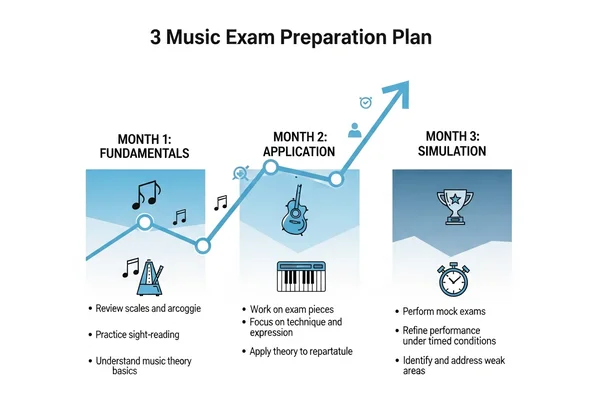
A structured plan helps both you and your students stay on track. Here is a sample three-month plan for preparing for a mid-grade theory exam using custom templates:
- Month 1: Foundation and Fundamentals. Focus on reinforcing the basics. Use wide-spaced templates for practicing scales, key signatures, and intervals. Create custom clef-practice sheets for any C-clefs required at their grade. The goal is speed and accuracy in the fundamentals.
- Month 2: Application and Context. Introduce exam-style questions. Use grand staff templates for basic harmony exercises and single-stave sheets for melody writing. Begin timing students as they complete these worksheets to build their time management skills.
- Month 3: Simulation and Refinement. In the final month, use only templates that exactly mimic the exam layout. Create full mock exams combining different question types on the same pages. This is the time to identify and fix any remaining weak spots.
Case Study: Improving Test Scores by 40% with Targeted Practice
One teacher we worked with, Sarah, was struggling to get her students past a plateau in their Grade 5 theory exam scores. They understood the concepts but panicked when faced with the exam paper's dense layout.
Sarah turned to custom staff paper from StaffPaper.org with remarkable results. For two months, her students practiced on templates that exactly matched the ABRSM format. She created rhythm-writing worksheets with the same number of empty bars as the actual exam. Harmony questions used grand staves with identical spacing to what they'd encounter on test day.
The results were remarkable. Her students' average mock test scores improved by 40%. They walked into the exam feeling confident and familiar with the format, allowing them to focus on the music. This case study shows that targeted practice with the right materials is not just helpful—it can be a complete game-changer.
Your Next Steps in Elevating Music Education
When preparing students for music exams, you need more than just theoretical knowledge—you need a strategic approach that builds confidence and familiarity. As we've seen, one of the most effective yet simple strategies is to use practice materials that mirror the real test. When you move beyond generic manuscript paper, you can address specific challenges directly. These include mastering clefs, improving handwriting, and becoming familiar with exam formats.
Here's what to remember:
- Know the Exam: Understand the specific layouts and requirements of the examination board your student is preparing for.
- Customize Your Tools: Use custom staff paper to create targeted exercises for different skills, instruments, and difficulty levels.
- Implement Strategically: Build a progressive plan that moves from foundational skills to full exam simulations.
By adopting this approach, you empower your students to walk into their exams with confidence, fully prepared for both the musical content and the physical format. You give them the best possible chance to succeed.
Ready to start creating better practice materials for your students? Visit StaffPaper.org to design and download unlimited free, high-quality, and fully customizable staff paper today.
Frequently Asked Questions About Music Exam Preparation
What is the standard staff paper format for ABRSM grade 5 theory exams?
The ABRSM Grade 5 theory exam uses a variety of layouts. Questions on harmony and melody writing are typically presented on grand staves (a treble and bass clef staff joined together). Other questions might use single staves. It's best to create practice sheets that match these formats, which you can easily do with a flexible online tool.
How can I help my students develop better notation handwriting skills?
Start with widely spaced staff paper. Using a template with fewer staves per page gives students more room to practice forming notes, clefs, and other symbols clearly. As their motor skills and confidence improve, you can gradually introduce them to paper with standard spacing to prepare them for the real exam.
Where can I find free customizable staff paper for music teachers?
StaffPaper.org is an excellent resource for music teachers. It offers a completely free tool to create and download high-quality PDF staff paper. You can customize the instrument type, clefs, number of staves per page, and paper size (A4/Letter), making it perfect for creating tailored teaching materials.
What are the most common mistakes students make in music theory exams?
Common mistakes include misreading the clef, incorrect key signatures, poor rhythmic notation, and messy handwriting that is hard for the examiner to read. Many of these issues can be minimized through targeted practice on custom worksheets that reinforce correct habits.
How many lines should staff paper have for young beginners?
For very young beginners (ages 5-7), starting with just one or two lines to practice drawing note heads can be effective before moving to a full five-line staff. When you do introduce the full staff, choose a template with very wide spacing and perhaps only 4-6 staves per page to make it less intimidating and easier to write on. You can create all these variations at StaffPaper.org.