Music Transcription by Ear: Printable Method
Have you ever hummed a beautiful melody while walking down the street, only to forget it by the time you reached home? Many musicians struggle with capturing the musical ideas that play in their heads or the songs they hear. Without a solid system for notation, these fleeting moments of inspiration can be lost forever.
Learning music transcription by ear is the bridge between hearing music and owning it. Mastering this skill turns fleeting melodies into lasting compositions, turning your ears into a direct link to the page. In this guide, we will explore how to sharpen your listening skills and use printable staff paper to document your musical journey accurately.
Whether you are a student preparing for a theory exam or a songwriter looking to preserve a new riff, this printable method provides the structure you need. This guide will help you transform sound into symbols using high-quality resources and proven ear training techniques.
Getting Started with Music Transcription
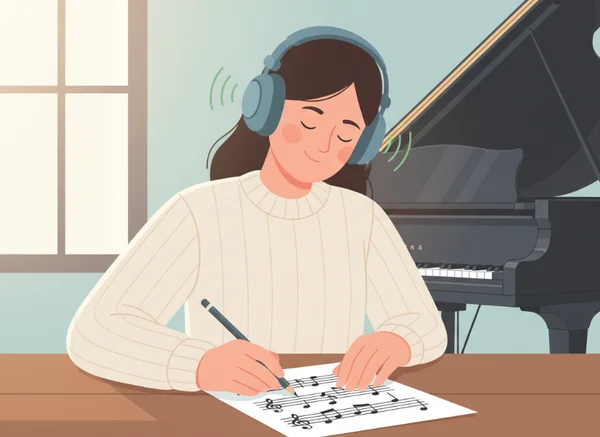
Transcription is the process of listening to music and writing it down in notation. While digital software is common, the tactile experience of writing on paper helps the brain process music more deeply. Before picking up your pencil, clarify your goals.
Why Transcribe Music by Ear?
Transcribing gives a massive boost to your musicality. It forces you to engage in "deep listening." You aren't just hearing a song; you are analyzing its DNA—the intervals, rhythms, and harmonic structure.
This practice improves your memory and your ability to improvise. It bridges the gap between your inner ear and your instrument. Furthermore, many jazz solos or indie tracks lack existing sheet music. Creating your own downloadable manuscript paper gives you total musical independence.
Essential Tools for Transcription
To begin your journey, you do not need an expensive studio. A few specific tools make the process professional and smooth:
- A Clear Audio Source: Use a device that allows you to play, pause, and rewind easily. "Slow-down" apps are helpful for fast passages.
- Your Instrument: Keep a piano or guitar nearby to check pitches and chords.
- High-Quality Paper: Use professional blank music sheets with clear lines and plenty of space for notes to avoid tearing while erasing.
- A Pencil and Good Eraser: Transcription involves trial and error. Avoid pens to keep your score neat.
Ear Training Exercises for Transcription
Transcription is the physical manifestation of ear training. If you cannot identify an interval or rhythm by ear, writing it down will be difficult. Prepare your brain with daily exercises.
Interval Recognition Practice
Intervals are the building blocks of melody. To transcribe effectively, recognize distances between notes instantly. Use "reference songs" for help. For example, a Perfect 4th sounds like the start of "Here Comes the Bride," while a Major 6th matches the first notes of "My Bonnie Lies Over the Ocean."
Play two notes on your instrument and identify the interval without looking. Once confident, sing the interval back. When you can hear and sing the distance between notes, writing them on a staff becomes a simple translation task rather than a guessing game.
Rhythmic Dictation Techniques
Rhythm can be harder to transcribe than pitch. If the timing is wrong, the melody becomes unrecognizable. Start by finding the "pulse" or beat. Determine if the meter is in 4/4, 3/4, or 6/8.
Subdivide the beat into eighth notes or triplets. Use a "rhythmic skeleton" by drawing small slashes on your staff paper to indicate where notes fall. This framework makes it easier to fill in the actual pitches later.
Step-by-Step Transcription Process
Follow these steps to ensure accuracy and reduce frustration.
Analyzing the Music Before Notation
Don't start writing immediately. Listen to the entire phrase several times first. Identify the key to determine your key signature. Determine the time signature and look for repeating patterns. Understanding the "big picture" creates a mental map that makes detailed notation much faster.
Notating Melodies on Staff Paper
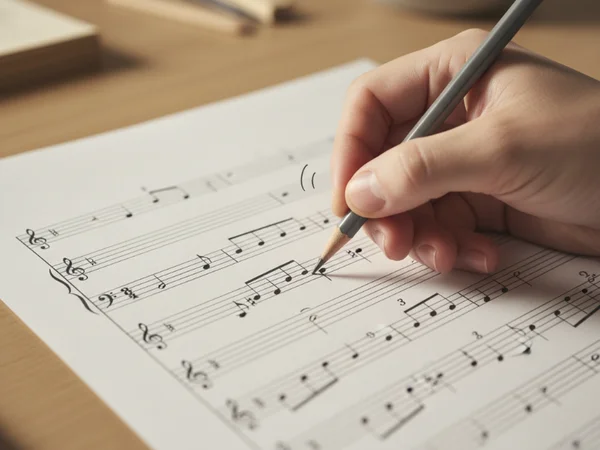
After analyzing the piece, start writing. Focus first on "anchor points"—notes landing on the downbeat of each measure. Once these are in place, fill in the notes that happen in between.
If you encounter a difficult passage, leave a few blank measures on your blank staff paper and move on. You can return to the "problem spots" later. This keeps your momentum going and ensures you create a functional, readable score.
Advanced Transcription Techniques
As you become comfortable with simple melodies, challenge yourself with complex musical layers.
Transcribing Complex Harmonies
Harmonies involve multiple notes, such as chords or vocal stacks. Use the "bottom-up" approach. Listen for the bass line first to find the root. Then, identify the highest melody note. The middle notes will reveal if the chord is major, minor, or a complex dominant 7th.
Transcribing harmonies takes patience. Listen to a chord repeatedly to catch every note. This hands-on process is music theory in action, revealing how composers layer their sounds.
Custom Staff Paper Templates for Professional Scores
Different instruments require specific layouts. A solo flute needs a single line, but a piano piece requires a Grand Staff. For guitar, you may need a mix of standard notation and TAB.
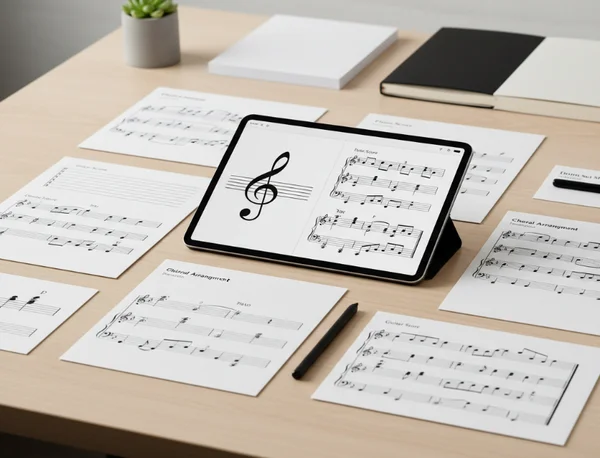
Custom templates let you pick the perfect layout. Adjust lines per page and paper size for transcriptions that look polished and professional. Using customized templates makes it easier to share your work with other musicians or archive it for your portfolio.
Your Next Steps in Music Transcription
Transcribing music by ear unlocks creativity—each session sharpens your skills and deepens your connection to music. It is a skill that grows every time you sit down with a blank page. By combining ear training with a disciplined notation process, you transform from a passive listener into an active creator.
Start simple. Transcribe a nursery rhyme or a pop melody before moving to complex arrangements. As your confidence grows, so will the complexity of the music you can capture.
To help you get started, get started today by downloading the perfect template. Having high-quality paper is the first step toward musical mastery.
FAQ Section
How long does it take to learn music transcription?
Learn basic transcription in weeks; master complex pieces with daily practice. Reaching a professional level for jazz solos or orchestral works takes months of consistency. Practice for 15–20 minutes daily rather than one long weekly session.
What kind of staff paper is best for transcription?
Use 10 or 12-line standard staff paper for melodies and a Grand Staff for piano. Students should look for wider spacing to write notes and corrections clearly. Find these variations using a free online tool.
Can I transcribe music without perfect pitch?
Yes. Most transcribers use "relative pitch." As long as you can find the first note on an instrument, you can use your knowledge of intervals to find every other note in the piece.
How do I improve my transcription speed?
Speed comes with pattern recognition. Once your brain recognizes common scales or arpeggios, you can write entire patterns instantly. Using a high-quality PDF generator to have paper ready at all times also prevents delays.
What is the difference between transcribing and arranging music?
Transcribing is writing down exactly what you hear. Arranging is taking that transcription and changing it—such as adapting a full band song for a solo piano. You must transcribe the original ideas before you can successfully arrange them.